
Time to give the planet a seat at the top table?
Thought Leadership, Policy

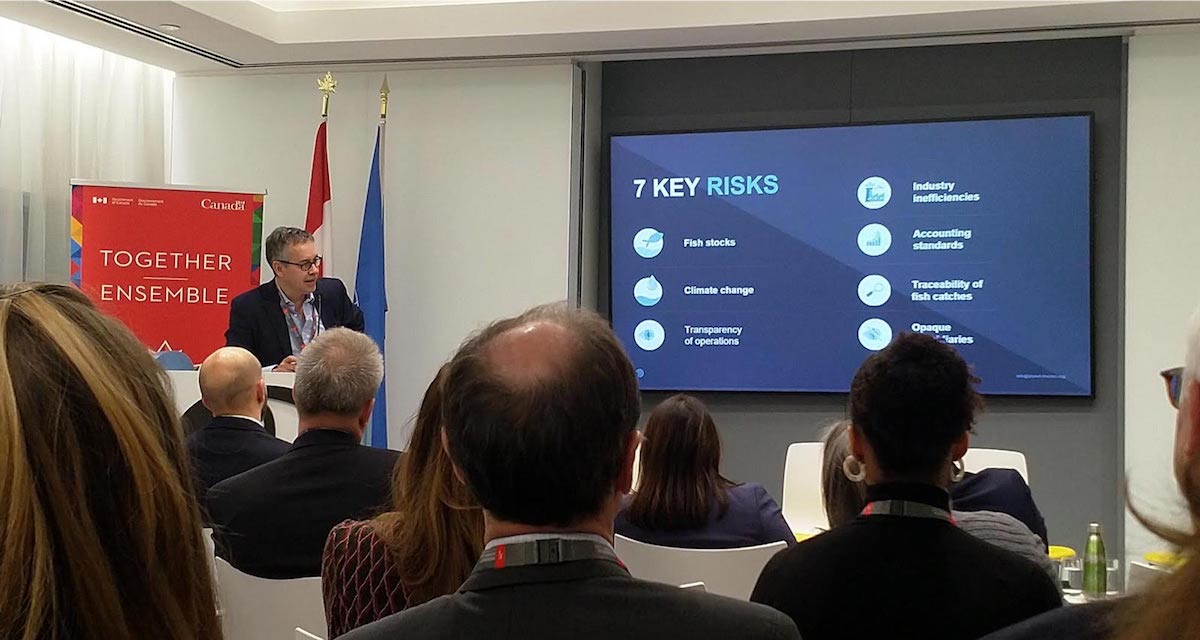
This week at Responsible Investor North America, Mark Campanale, Co-Founder, Planet Tracker and Carbon Tracker, and Gabriel Thoumi, CFA, FRM, Planet Tracker, each called on investors to assess their blue and green economy impacts.

Why? Because the green economy – agriculture, forestry and fishing – and the blue economy – economic contribution from oceans – together represent the 4th largest global economy, much greater than most of the countries in G20.

So shouldn’t the green and blue economies have a seat at the table at the G20 meetings alongside the other largest global economies?

At $3.3 trillion and $3 trillion (est.) respectively, the green and blue economies are larger than the economies of many of the largest countries globally:
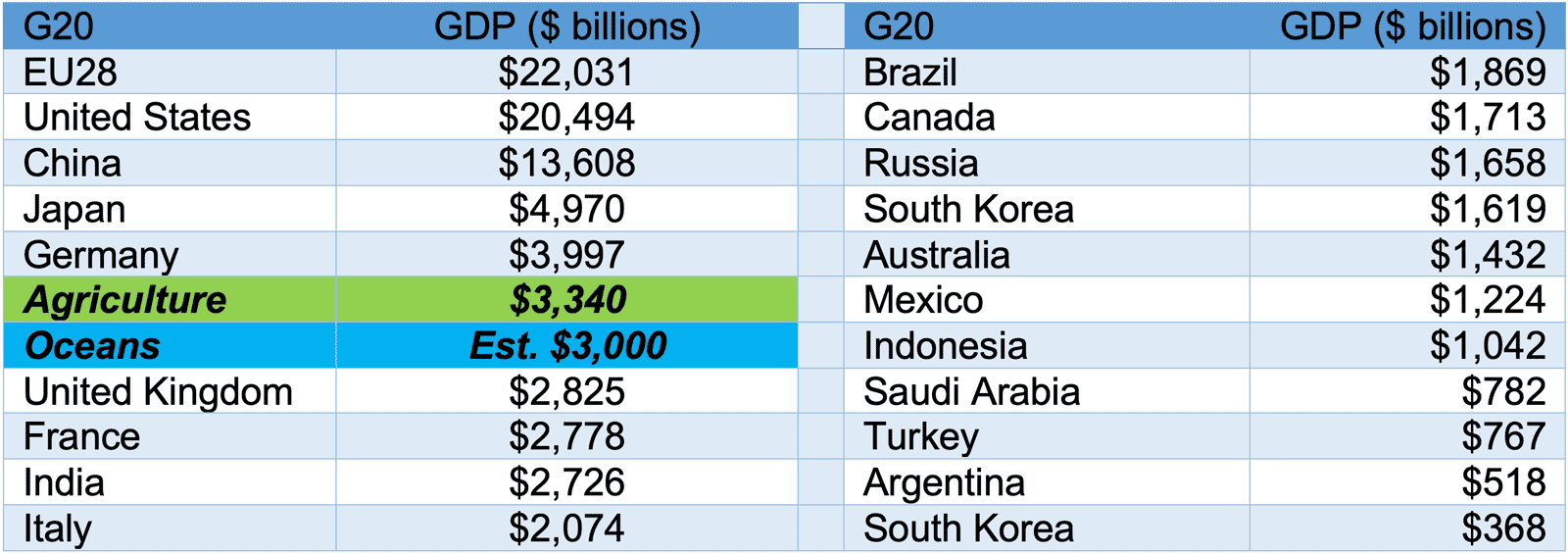
G20 Graph

Source: IMF 2018, World Bank 2018, WWF, Responsible Investor Research.

The green economy’s impact on the Earth is substantial. In 2018 alone, the agriculture sector contributed $3.34 trillion to the global economy.[i][ii] The environmental cost of this value is significant as primary food production causes 11% of GHG emissions and the overall global food system – from farm to fork – causes 37% of global GHG emissions.[iii]

Likewise, the blue economy’s impact on the Earth is also very large.

Just in Japan alone, only a portion of its blue economy, the wild-catch fishing industry, is 2% of Japanese exports and 2% of Japanese imports, right behind electronic components, which Japan is known for.

Investors are not yet taking responsibility for their green and blue economy impacts for two reasons: they need investment grade projects and they require content expertise and definition.

Mark Campanale, the Founder of Planet Tracker, explained that investors are not taking responsibility for driving 90% of the planet’s fisheries towards collapse because of over-fishing as the “market doesn’t recognise boundaries and doesn’t price scarcity as long as you can fish somewhere if you can’t catch locally.”

He advised investors to review the recent Planet Tracker Report, Perfect Storm: Profits at Risk in the Japanese Seafood Industry, for the key recommendations to address these blue economy risks and better understand key opportunities.

This week, UNFCCC negotiators are meeting at COP 25 in Madrid as Bank of England Governor Mark Carney has announced he will become the U.N. special envoy on climate action and climate finance, starting in 2020.

In this role, Mr. Carney, who is replacing Michael Bloomberg who stepped down to run for U.S. president, will push investors to be responsible for their climate change emissions, including their impacts on the largest global economies, like the green and blue economies.

Not a moment too soon as, in the meantime, emissions continue to rise, increasing the risk to the global economy.
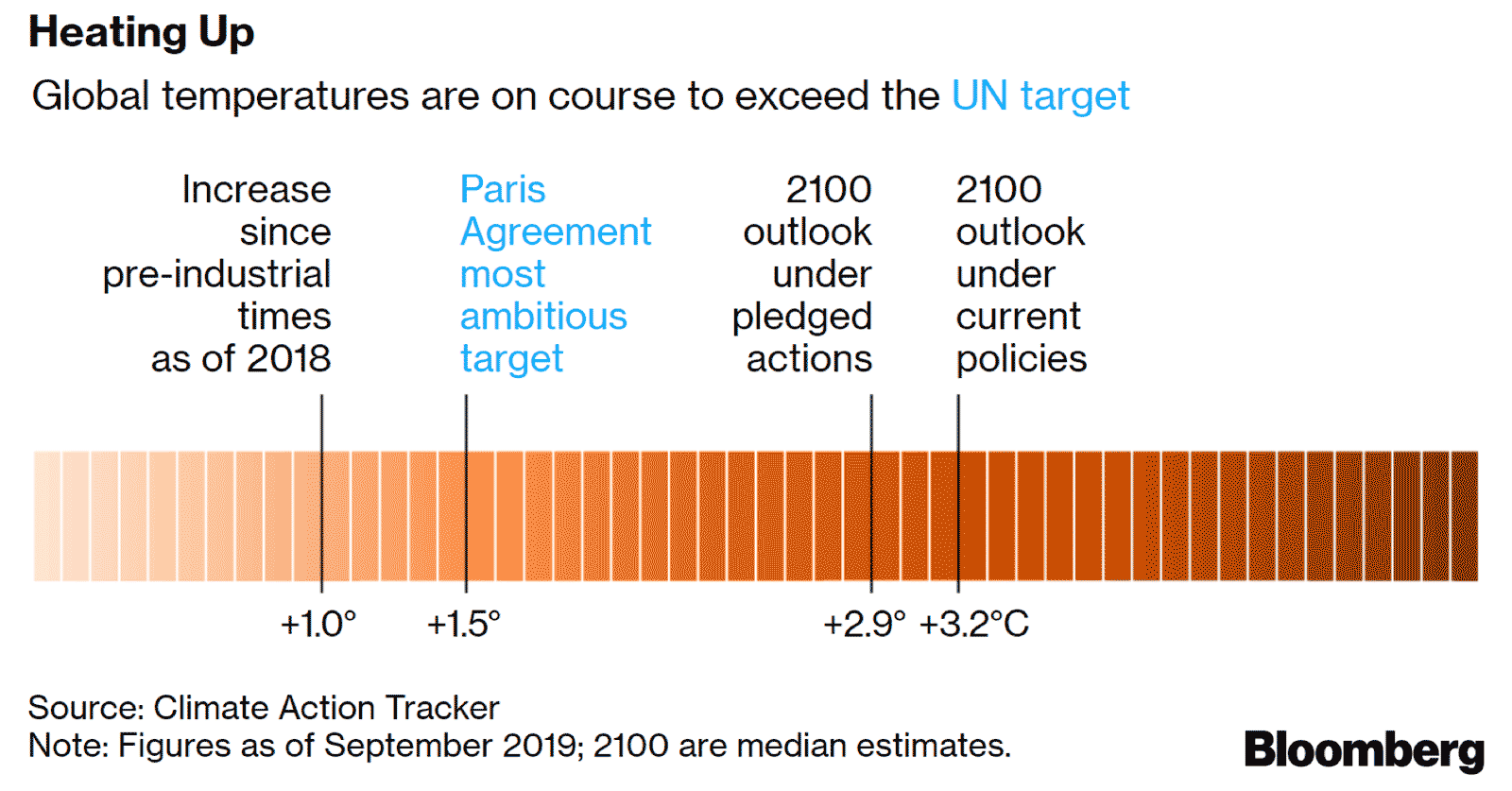
Heating Up

[i] The Economics of Ecosystems & Biodiversity (2019). TEEB for Agriculture & Food.

[ii] World Bank national accounts data, and OECD National Accounts data files (2018). Agriculture, forestry, and fishing, value added (current US$). Agriculture (code is NV.AGR.TOTL.CD) corresponds to ISIC divisions 1-5 and includes forestry, hunting, and fishing, as well as cultivation of crops and livestock production. Value added is the net output of a sector after adding up all outputs and subtracting intermediate inputs. It is calculated without making deductions for depreciation of fabricated assets or depletion and degradation of natural resources. The origin of value added is determined by the International Standard Industrial Classification (ISIC), revision 3. Data are in current U.S. dollars.

[iii] IPCC (2019). Climate Change and Land: an IPCC special report on climate change, desertification, land degradation, sustainable land management, food security, and greenhouse gas fluxes in terrestrial ecosystems.

The latest reports to your inbox

Don’t miss out! To receive Planet Tracker's reports just click below and complete the contact form.
 

Sign up

Privacy Overview

Our Sites use cookies to enhance your experience while using those Sites. Cookies are pieces of information that some websites transfer to the computer or device that is browsing that website and are used for record-keeping purposes at many websites.

Our Sites may place and access certain first-party cookies on your computer or device. First-party cookies are those placed directly by us and are used only by us. We use cookies to facilitate and improve your experience of our Sites and to provide and improve our services. We have carefully chosen these cookies and have taken steps to ensure that your privacy and personal data is protected and respected at all times.

All cookies used by and on our Sites are used in accordance with current data protection and privacy law.

Before cookies are placed on your computer or device, you will be shown a prompt requesting your consent to set those cookies when you access one of our Sites. By giving your consent to the placing of cookies you are enabling us to provide the best possible experience and service to you. You may, if you wish, deny consent to the placing of all cookies, but you will not be allowed access to the site.

Certain features of our Sites depend on cookies to function. These cookies are sometimes known as “strictly necessary” cookies.

Our Sites also use analytics services provided by Google. “Google analytics” refers to a set of Google tools used to collect and analyse anonymous usage information, enabling us to better understand how the relevant Site is used. This, in turn, enables us to improve our Sites and the services offered through them.

The analytics service used by our Sites uses cookies to gather the required information. Our use of these analytics does not pose any risk to your privacy or your safe use of the relevant Site, however it does enable us to continually improve that Site, making it a better and more useful experience for you.

The analytics service used by our Sites uses the following cookies:

Name of Cookie First / Third Party Provider Purpose
Google Analytics Third Google For analysing use

In addition to the controls that we provide, you can choose to enable or disable cookies in your internet browser. Most internet browsers also enable you to choose whether you wish to disable all cookies or only third-party cookies. By default, most internet browsers accept cookies, but this can be changed. For further details, please consult the help menu in your internet browser or the documentation that came with your device.

You can choose to delete cookies on your computer or device at any time, however you may lose any information that enables you to access the relevant Site more quickly and efficiently including, but not limited to, login and personalisation settings.

It is recommended that you keep your internet browser and operating system up-to-date and that you consult the help and guidance provided by the developer of your internet browser and manufacturer of your computer or device if you are unsure about adjusting your privacy settings.

Social sharing links

We also use Google Analytics to track social shares made at our website. Google automatically collect and store certain information in their server logs which includes device event information such as crashes, system activity, hardware settings, browser type, browser language, the date and time of your request and referral URL, cookies that may uniquely identify your browser or your Google Account, in accordance with their data privacy policy: https://policies.google.com/privacy

Twitter:

We use a Twitter Tweet widget at our website. As a result, our website makes requests to Twitter’s servers for you to be able to tweet our webpages using your Twitter account. These requests make your IP address visible to Twitter, who may use it in accordance with their data privacy policy: https://twitter.com/en/privacy#update

LinkedIn:

We use a Linkedin Share widget at our website to allow you to share our webpages on Linkedin. These requests may track your IP address in accordance with their data privacy policy: https://www.linkedin.com/legal/privacy-policy