
Countries reliant on nature dependent exports are impacting credit ratings, new analysis shows
Planet Tracker’s landmark new analysis examines the link between countries’ dependence on natural resource exports, their sovereign credit ratings and their resilience to global economic shocks.
- Planet Tracker issues comprehensive analysis of the link between sovereign credit ratings and the dependency of the economy on natural resource exports for both renewables and non-renewables
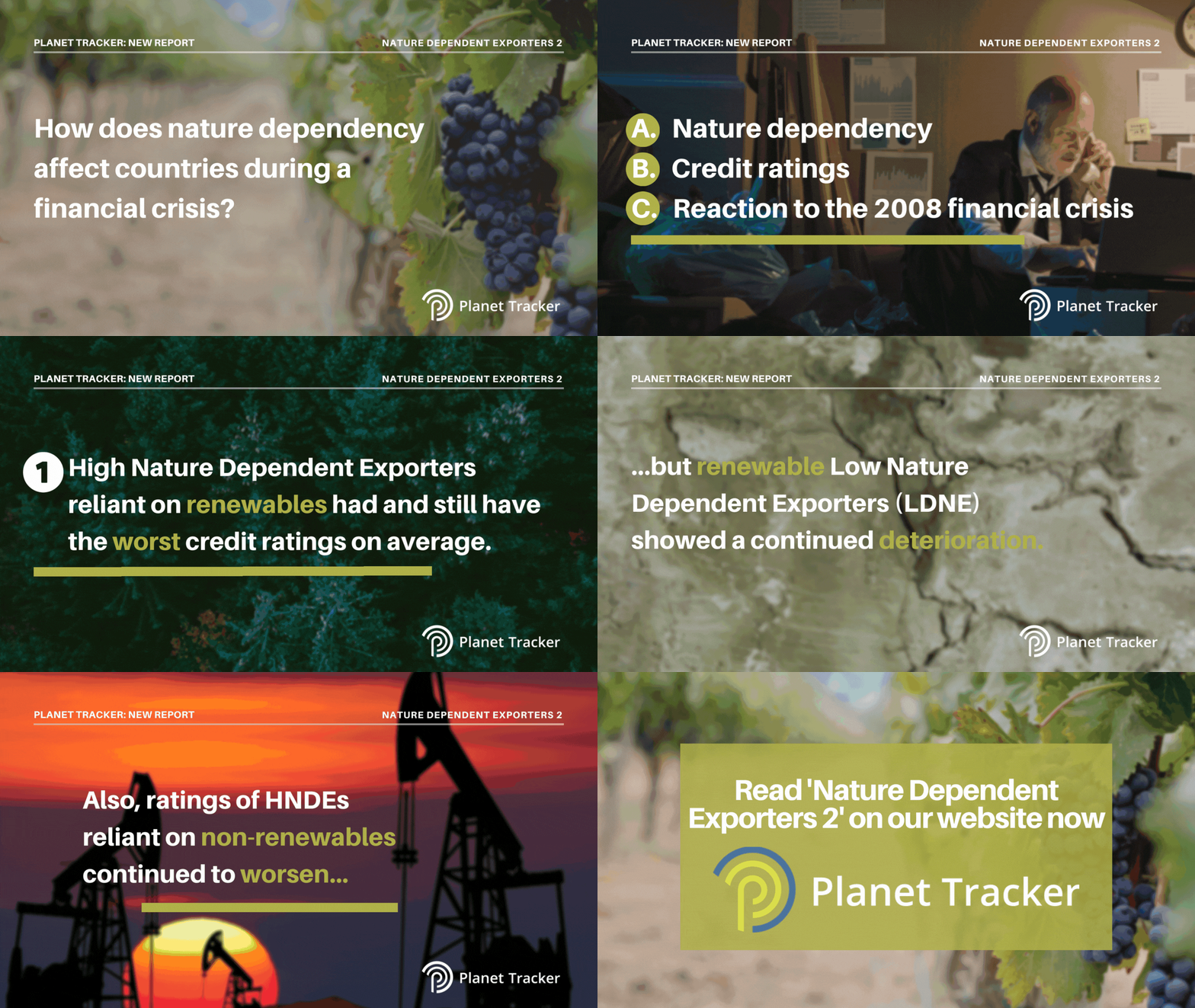
- Countries most dependent on natural resource exports and non-renewable resources have worst credit ratings on average
- Smaller nature-dependent economies, from Guatemala to Ghana, have demonstrated downgraded credit ratings after the financial crisis implying they are most vulnerable to future economic shocks
- Investors must ensure nature risk is integrated into decision-making on long term bond performance
London, 22 June 2023: Today Planet Tracker, in co-operation with the London School of Economics, launches a ground-breaking analysis of the effects of nature dependency on a country’s credit rating, finding that countries which are highly dependent on natural resources exports have had their bond rating marked down by credit rating agencies.
This analysis has significant implications for bond markets, indicating that a country’s nature dependent exports may factor into its long-term financial rating.
The study also found that the credit ratings of nations reliant on non-renewable materials, such as oil and minerals, have been deteriorating at the fastest rate since the 2008 financial crisis, with these countries (such as Paraguay and Zimbabwe) dropping at a rate of one full letter credit score every 4.2 years relative to those less reliant on nature for exports (such as France and Singapore).
This implies that those nations face higher financial risks and are less resilient to shocks. Exporters of renewable natural resources, including agricultural products, have seen their credit ratings stabilise during the same period.
Surprisingly, the analysis also demonstrated that after the 2008 financial crisis, the correlation between nature and credit ratings has weakened, and economies most dependent on nature exports have maintained a stable rating and those least dependent have worsened.
This indicated that, following market shocks, ratings may not price nature in as extensively as they should. Planet Tracker therefore calls on investors to address risks based on the best science available.
Investors and policymakers alike are increasingly keenly aware of the importance of biodiversity and natural resources to the economy, with some estimates suggesting that nature loss puts almost USD $55 trillion at risk. As global institutions take measures to protect nature, it is vital for financial institutions to understand the critical link between natural resources in the economy and long-term bond performance.
This report follows Planet Tracker’s work published in Nature Dependent Exporters 2022 which established the categories of high, medium and low Nature Dependent Exporters and illustrated the importance of natural resource exports as a unit of analysis.
John Willis, Director of Research at Planet Tracker, comments: “Planet Tracker believes that a good understanding of whether a country is dependent on nature exports is necessary for assessing a sovereign’s long term financial outlook.
“Our data shows a historically clear link between countries highly dependent on nature and poor credit scores, particularly those with smaller GDPs who, as discussed at recent UN climate conferences, are particularly vulnerable to the effects of climate change and most in need of critical financing, and those reliant on non-renewables.
“We hope that investors will use our research as a basis for tying investments and long-term decision making to nature exports. Without understanding this crucial factor, financiers risk acting in the dark in an increasingly nature-dependent world”.
Dr Zachary Turk, Visiting Fellow, Department of Geography and Environment, London School of Economics and Political Science, comments: “Our comprehensive analysis demonstrates nature’s relationship with credit ratings is more complex than one might think. If credit ratings fail to sufficiently account for nature loss following economic shocks, investors who rely on such measures will be unable to correctly manage future risks across their portfolios.
“Credit ratings are enormously complicated and dependent on a host of variables, yet our data shows a consistent historical link that investors in the fixed-income market would be brave to ignore”.
The underlying data of the report can be examined in further detail at the Planet Tracker NDE Interactive Dashboard.
Nature Dependent Exporters: Credit Ratings can be downloaded in full here.
ENDS
For more information please contact:
Izzy Schaw Miller, ESG Communications | t: +07905 619881 | izzy@esgcomms.com
ABOUT PLANET TRACKER
Planet Tracker is a non-profit financial think tank producing analytics and reports to align capital markets with planetary boundaries. Our mission is to create significant and irreversible transformation of global financial activities by 2030. By informing, enabling and mobilising the transformative power of capital markets we aim to deliver a financial system that is fully aligned with a net-zero, nature-positive economy. Planet Tracker proactively engages with financial institutions to drive change in their investment strategies. We ensure they know exactly what risk is built into their investments and identify opportunities from funding the systems transformations we advocate.


