Nitrogen fertiliser production outstrips global needs and exceeds planetary boundaries by factor of two
Report from Planet Tracker calls on financial institutions to help drive efficiency improvements as global food production increases
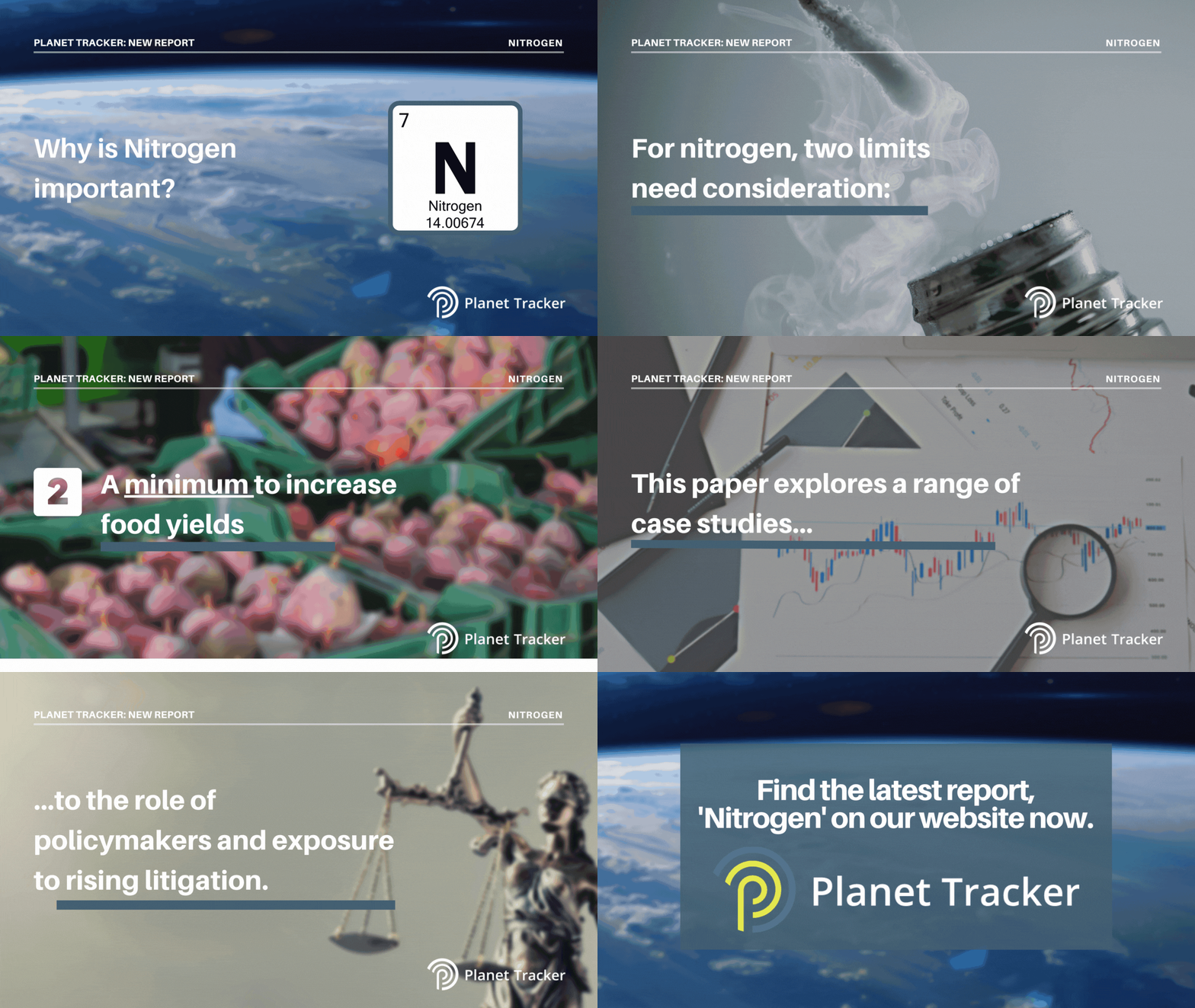
- Nitrogen fertiliser usage is outstripping planetary boundaries two-fold while producing up to 5% of global GHGs
- Nitrogen is a critical input into global food system, which contributes 34% of annual GHG emissions but is plagued by inefficiency: just 30-35% of nitrogen-based fertiliser is taken up by plants
- The world uses twice as much nitrogen fertiliser as it needs, but production capacity is forecast to grow 6% to 202 million tonnes by 2027. This could result in stranded assets for companies and financiers. Are we reaching peak fertiliser production?
- Planet Tracker’s report shows that policy makers and financial institutions must take action to ensure more equitable and sustainable use of fertilisers, to significantly improve financial outcomes and prevent environmental damage.
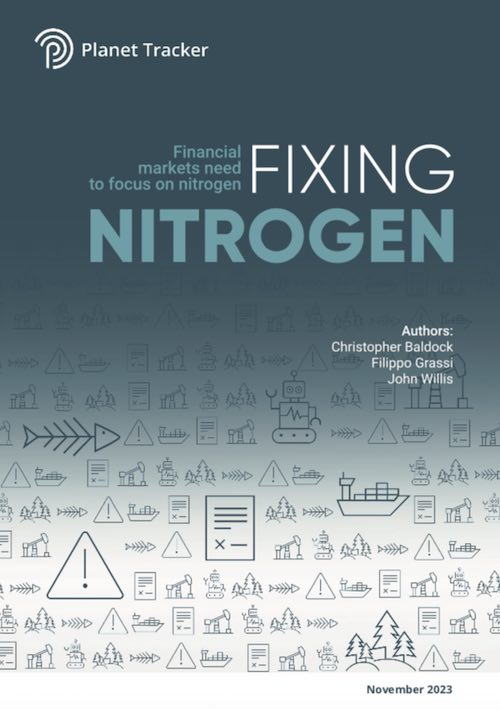
London, 15 November 2023: Planet Tracker’s latest report, Fixing Nitrogen: Financial markets need to focus on nitrogen, presents a detailed analysis of the shortcomings of the global nitrogen industry, which is critical for producing ammonia-based fertilisers essential to food production. The report warns that financial markets must push for increasing industry efficiencies to meet up to nine SDGs, feed a growing global population and prepare to meet the Global Biodiversity Framework, which calls for reducing nutrient losses to the environment by 50% by 2030.
In a series of compelling case-studies, the paper highlights the importance of nitrogen as a key environmental and financial issue for companies and financiers which is often outshone by its periodic table neighbour, carbon.
The report finds that we are using nitrogen at a pace that the earth cannot sustain, outstripping planetary boundaries two-fold, while producing far more fertilisers than the world currently needs. At present, the production of nitrogen fertiliser consumes 2% of the world’s energy and produces between 1.4% and 5% of global greenhouse gas emissions.
Lead author ,Chris Baldock, Head of Data Methodology at Planet Tracker comments: “Nitrogen-based fertiliser is a crucial input to the USD 14 trillion global food system, as well as being essential for maintaining food security. The nitrogen industry that supplies it, however, is in urgent need of change.
“At present the industry pollutes at an alarming rate and contributes to billions of dollars of economic losses and social harms from fertiliser run-off and associated issues such as algal blooms. Investor complacency on this issue will surely come back to haunt them.
“We are calling on investors to be a proactive part of this process and push for change across the whole value chain, assessing their portfolio companies for nitrogen and fertiliser-related risks. A better, more equitable system for distributing and producing fertilisers could have significant economic benefits”.
The report finds that fertilisers are inefficiently used, with significant amounts deployed in the developed world beyond the point of effectiveness, with only 30-35% of fertilisers applied being taken up by plants. Much flows into water sources, where it can poison marine life and cause significant economic consequences due to events such as algal blooms. The report cites figures that a small group of aquaculture companies lost up to USD 358 million due to algal bloom events between 2013 and 2018.
In the developing world, there are opportunities for increased fertiliser use to boost yields and enhance food security. Moreover, an equitable use of fertilisers would help countries preserve land for biodiversity, reduce money spent on fertilisation and increase revenue from crop yields.
Planet Tracker calls on financial institutions to review their portfolios for potential fertiliser use inefficiencies and calls upon companies to report their dependency on nitrogen and exposure to nitrogen-related impacts. It also urges policymakers to put in place forward thinking fertiliser use policies that would reduce emissions and secure food supplies across the globe.
Fixing Nitrogen: Financial markets need to focus on nitrogen can be downloaded in full here.
ENDS
For more information please contact:
Josh Hoppen, ESG Communications | t: +34 612 28 72 64 | josh@esgcommunications.com
ABOUT PLANET TRACKER
Planet Tracker is an award-winning non-profit think tank focused on sustainable finance with the purpose of ensuring that capital markets’ investment and lending decisions are aligned with planetary boundaries and support a just transition. Its mission is to create transformation of global financial activities by 2030 to bring about real world change in our means of production so that they align with a resilient, just, net-zero and nature-positive economy. Planet Tracker serves both as a watchdog on corporate behaviour, including issues such as greenwashing, and serves as an ally to support finance and business to know how to undertake transition. By identifying the companies causing the worst environmental and social damage within targeted supply chains, Planet Tracker then identifies the investors and lenders in these companies whose financing is enabling these practices to continue unchallenged.