Companies mismanaging plastic waste face acute financial and reputational risks
New study links poor packaging practices to litigation, regulatory costs and downside share price risk – particularly in the FMCG sector
- Worst-performing firms double their risk of share price declines of 70% or more.
- Most companies lack targets to increase recycled material content of packaging, and only 12% have strategies to mitigate microplastic pollution.
- Existing packaging goals have limited scope, increasing greenwashing risk.
London, October 16, 2025 – A new study from Planet Tracker and the MSCI Institute finds that companies with weak plastic-related governance – such as poor or absent packaging-related targets and lack of comprehensive strategies to address waste – face heightened financial risks, from lawsuits and compliance costs to reputational damage and potential share price declines.
The report, Microplastics – Macro Risks & the Financial Cost of Inaction, analyses over 450 global companies and shows that those with the weakest packaging risk management were significantly more likely to suffer large share price drawdowns over the past decade. One assessment revealed that bottom-quintile firms were more than twice as likely as their peers to experience share price declines of 70% or more. While extreme, such outcomes highlight the financial materiality of inadequate plastic strategies.
Alongside these downside risks, the report points to indirect financial pressures. These include litigation costs – estimated at between USD20 billion and 100 billion by 2030 – potential credit rating impacts and exposure to rising regulatory frameworks, such as extended producer responsibility (EPR) schemes and single-use plastic bans.
The report also finds that many companies are failing to set targets to increase the recycled material content of packaging. Sector laggards include restaurants, of which 72% have no targets. The majority of companies (88%) also lack clear strategies for mitigating packaging waste and microplastic pollution (see Fig.1).
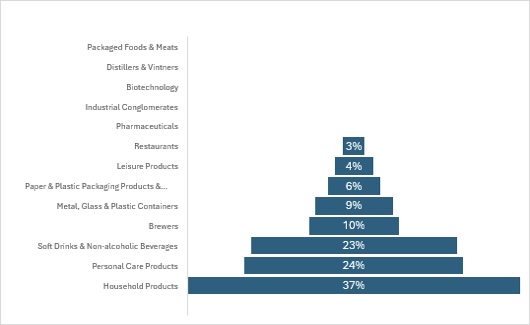
Fig.1 Percentage of companies with a strategy to reduce the environmental impact of packaging.
Of the companies with targets, many have a narrow scope, meaning their goals apply only to specific product lines or packaging types, not to the entire company. Selective commitments limit the effectiveness and credibility of sustainability claims. Combined with rising regulatory and legal scrutiny, this increases both company and investor exposure to greenwashing risks.
Only a handful of companies, such as Coca-Cola and PepsiCo, stand out with more transparent strategies. Nevertheless, both have a track record of shifting or missing targets and have been targeted by litigations over their packaging governance.
Thalia Bofiliou, Senior Investment Analyst at Planet Tracker, said: “It feels as though a new damning study on the serious health impacts of microplastics is published every month. Now, the financial cost of microplastic pollution is coming into sharp relief. This is no longer a fringe environmental issue – it is a financially material risk. Investors cannot ignore the evidence; inadequate plastic packaging governance faces materially greater downside risk, and exposes companies to lawsuits, regulatory costs and long-term damage to brand trust.”
Rumi Mahmood, Research Director, MSCI Institute, said: “The data suggests that companies’ approach to plastic waste management has financial implications. Businesses that contribute to the growing issue of microplastics through weak strategies for packaging and material waste are associated with greater revenue and share price variability, highlighting that microplastic-related risks are increasingly relevant for both businesses and investors.”
Investors can take a proactive role by:
- Reviewing portfolios with a focus on industries that contribute significantly to microplastic pollution, and identifying potential legal, regulatory or ESG risks.
- Encouraging companies to set clear and ambitious goals for recycled materials and circular packaging solutions.
- Incorporating microplastic pollution risk – including the breakdown of packaging materials into microplastics – into ESG assessments and factoring these risks into investment decisions.
Read the full report here.
ENDS
For more information, please contact:
Ino Rousselet, Account Director, ESG Communications | t: + 44 (0)7786148010 | planettracker@esgcomms.com
Sally Palmer, Head of Communications, Planet Tracker | t: + 44 (0)7799472824 | sally.palmer@tracker-group.org
About Planet Tracker
Planet Tracker is an award-winning non-profit financial think tank aligning capital markets with planetary boundaries. Created with the vision of a financial system that is fully aligned with a net-zero, resilient, nature positive and just economy well before 2050, Planet Tracker generates break-through analytics that reveal both the role of capital markets in the degradation of our ecosystem and show the opportunities of transitioning to a zero-carbon, nature positive economy.