Australia’s Fires Show the World It Needs a Fire Extinguisher
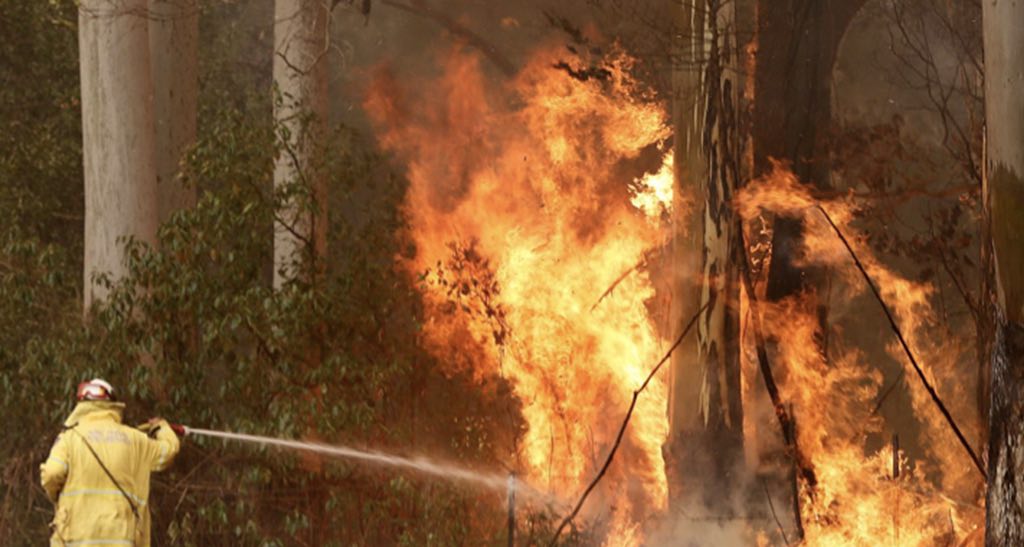
Anyone can use a fire extinguisher; using one requires no special skills. Yet Australia’s fires remind us that fires, driven by extreme weather and climate change, not only burn the planet but also injure the economy.
While Australia attracts more than 8.6 million tourists annually with promises of magnificent landscapes, crystal blue waters and bright skies, at more than 10.3 million hectares burnt, Australia’s recent fires destroyed an area the size of the U.S. state of Kentucky or the country of Switzerland. To make matters worse, the fires also killed at least 28 people and over a 1 billion animals, destroyed some 2700 homes, cropland and pasture and increased health risks and wrecked water systems.
These same fires – driven by many factors including extreme weather caused by climate change – increase as global temperatures climb, vegetation dries out and lightning strikes multiply.
In other words – fires increase global warming, global warming increases fires.
Bloomberg now forecasts that Australia’s recent fires could decrease Australia’s annual GDP growth by 1.6% driven by negative impacts from a decrease in tourism, a decline in consumer confidence and a destruction of its economic engine because of rising pollution.[i]
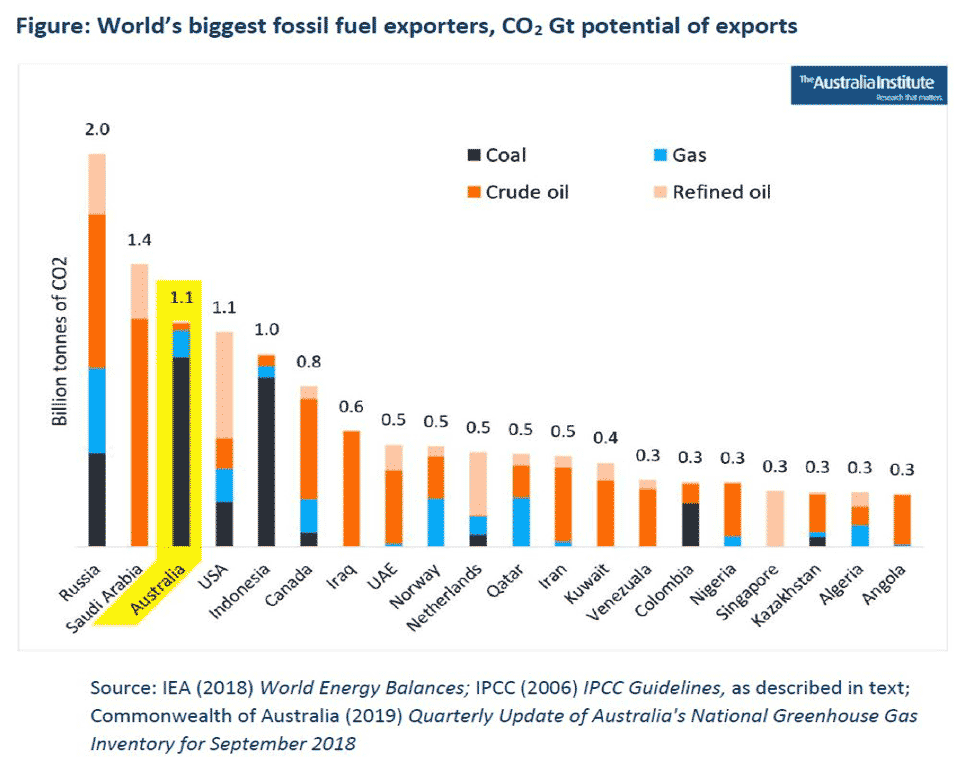 Figure 1: Australia is the 3rd Largest Emissions Exporter Globally.[ii]
Australia’s fires hurt some of its largest cities – Sydney, Canberra and Melbourne – that are responsible for more than 45% of the country’s GDP and population respectively. Initial insured losses alone are forecast to exceed $3.5 billion, without counting uninsured losses by smallholders.
While Australia’s domestic emissions are 1.3% of global emissions, Australia exported emissions in the form of coal and natural gas are 3 times its domestic emissions at over 1.1 billion metric tonnes, smaller only than the total exported emissions of Russia and Saudi Arabia – see Figure 1).
Australia with 0.3% of the world’s population exports 5% of the world’s GhG emissions.
To make matters worse, Australia’s exported emissions between 2008 and 2017 grew 4.5% annually. In fact, Australia’s exported emissions go to a handful of countries, primarily Japan, China, South Korea, India and Taiwan.[iii]
And this negative cycle has other bad impacts on health, food and agriculture systems, water availability and tourism. Some examples are:
- Health: hospital admissions have increased 10% in Sydney during the fires with the most vulnerable elderly and children. Sydney’s air pollution has been as high as 734 micrograms – the same as smoking about two packs of cigarettes a day.[iv]
- Food and agriculture systems: fires destroyed pastures that are partial homes to 13% of Australia’s national sheep flock.
- Water: availability has decreased with negative impacts forecast for both Australia’s towns and its dairy supply as water systems in Victoria and New South Wales were damaged from both the drought and subsequent fires.
- Tourism: the tourism Australia’s economy also depends on is hurt by the same emissions that it is exporting
So, as we welcome a new decade and as Australia faces negative GDP losses from its fires while continuing to grow its exported emissions, rather than sitting back and guessing which country is next, let’s each contribute to financing the installation of a world fire extinguisher for our planet as its continues to heat up.
This is why at Planet Tracker our focus is on the role of the financial community and their investment strategies. Our contribution to financing the building the world’s fire extinguisher is to convince equity and credit analysts and portfolio managers to:
- Address threats from climate change to food and agriculture systems, water availability, and health, as a fiduciary responsibility, in order to protect beneficiaries’ interest while conserving their capital.
- Integrate into investment policy statements these same risks so that portfolio managers can deploy required tools that address risks from extreme weather and climate change, including fires and their negative impacts on food and agriculture systems, water availability and health.
[i] McIntyre, Bloomberg, 16 January 2020. Australia Insight: What to Watch for Wildfire Economic Impacts.
[ii] Kilvert, ABC Australia, 19 August 2019. Australia is the world’s third-largest exporter of CO2 in fossil fuels, report finds.
[iii] Fickling, Bloomberg, 6 January 2020. Fires Reap What Australia’s Exports Have Sown.
[iv] BBC, 17 January 2020. Australia bushfires: Pollution concerns for tennis tournament.